
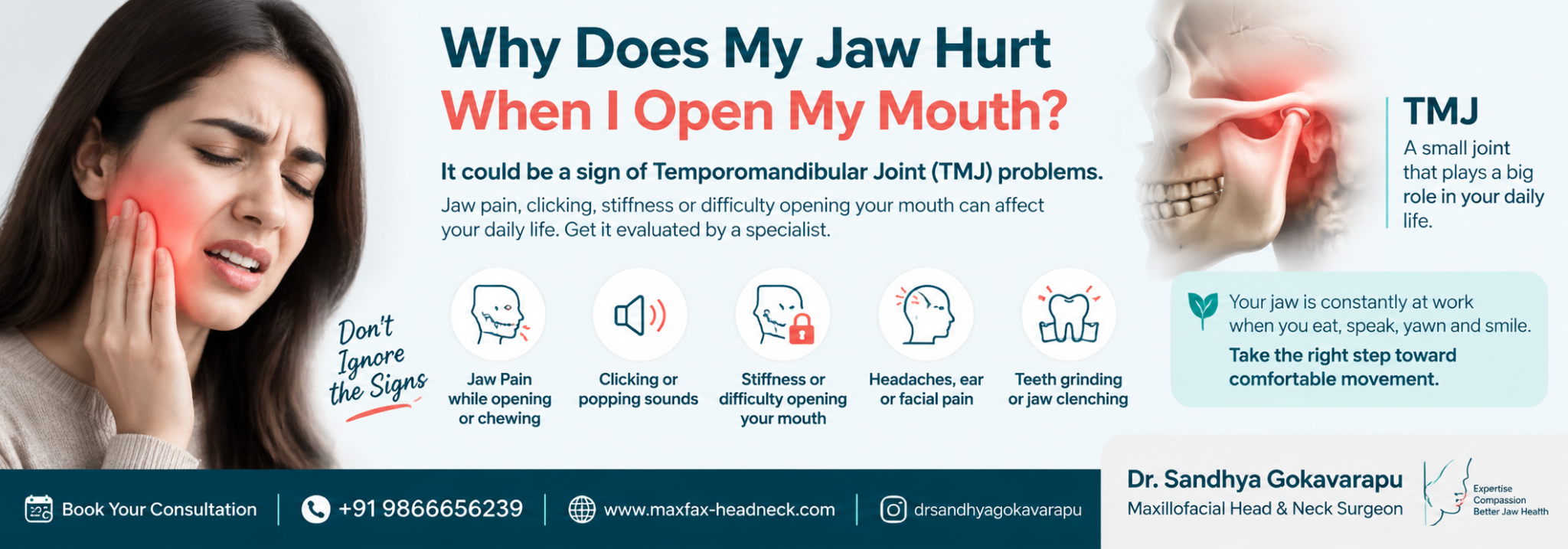
Why Does My Jaw Hurt When I Open My Mouth? Understanding TMJ Problems
Opening your mouth, chewing food, speaking, yawning, and smiling are everyday movements that most people do without thinking. But when jaw pain, stiffness, or discomfort starts affecting these simple activities, it may be a sign that something is wrong with your jaw joint.
One common reason behind jaw pain while opening the mouth is a problem with the Temporomandibular Joint (TMJ). The TMJ connects your jawbone to your skull and allows smooth movement of your lower jaw. When this joint or the surrounding muscles experience stress or damage, it can lead to a condition known as Temporomandibular Joint Disorder (TMD).
What Causes Jaw Pain While Opening Your Mouth?
TMJ problems can develop due to several factors. Some common causes include:
1. Teeth Grinding and Jaw Clenching
Many people unknowingly clench their jaw or grind their teeth, especially during sleep or stressful situations. This constant pressure can strain the jaw muscles and increase stress on the TMJ, leading to pain and stiffness.
2. Jaw Injury or Trauma
An injury to the face, jaw, or head can affect the alignment and function of the TMJ. Even a previous injury that seemed minor can sometimes contribute to long-term jaw discomfort.
3. Arthritis in the Jaw Joint
Conditions like osteoarthritis or rheumatoid arthritis can affect the TMJ, causing inflammation, pain, and reduced jaw movement.
4. Stress and Muscle Tension
Emotional stress can increase muscle tension around the jaw and face. Continuous stress may contribute to jaw tightness, soreness, and discomfort while opening or closing the mouth.
5. Bite Problems
An uneven bite or misalignment of teeth can place extra pressure on the jaw joint, affecting its normal movement.
Common Signs of TMJ Problems
Jaw pain is not the only symptom associated with TMJ disorders. You may also experience:
✅ Clicking, popping, or grinding sounds while moving your jaw
✅ Pain while chewing or biting food
✅ Difficulty opening your mouth fully
✅ Jaw stiffness, especially after waking up
✅ Pain around the ear, face, or temples
✅ Frequent headaches associated with jaw tension
✅ A feeling that your jaw is locking or getting stuck
Ignoring these symptoms for a long time may affect your daily comfort and jaw function.
When Should You Consult a Specialist?
Occasional jaw discomfort may not always indicate a serious problem. However, if your symptoms are recurring, worsening, or affecting your ability to eat, speak, or open your mouth comfortably, professional evaluation is recommended.
A Maxillofacial Head & Neck Surgeon can assess your jaw movement, identify the underlying cause, and suggest appropriate treatment based on your condition.
How Are TMJ Problems Diagnosed?
Diagnosis usually involves a detailed evaluation of your symptoms, jaw movement, medical history, and physical examination. In some cases, imaging tests may be recommended to understand the condition of the joint, surrounding structures, and bone changes.
Early diagnosis can help prevent symptoms from becoming more severe and improve long-term jaw comfort.
Treatment Options for TMJ Disorders
Treatment depends on the cause and severity of the problem. Options may include:
Lifestyle changes and jaw care practices
Stress management techniques
Medication for pain and inflammation (as advised by a doctor)
Physiotherapy exercises for jaw movement
Night guards for teeth grinding-related problems
Advanced treatment options for complex TMJ conditions
The right approach depends on an individual’s symptoms and overall jaw health.
Take Your Jaw Pain Seriously
Your jaw plays an important role in eating, speaking, and daily facial movements. Persistent pain, clicking sounds, or difficulty opening your mouth should not be ignored.
Understanding the warning signs of TMJ problems and seeking timely medical advice can help you maintain better jaw function and comfort.
👩⚕️ Consult Dr. Sandhya Gokavarapu
Maxillofacial Head & Neck Surgeon
📞 Book Your Consultation: +91 9866656239
🌐 www.maxfax-headneck.com
✨ Listen to your symptoms. Understand your jaw health. Take the right step toward comfortable movement.