Temporomandibular joint disorders can make everyday activities such as eating, speaking, yawning, and opening the mouth uncomfortable. Some people experience persistent jaw pain, clicking or popping sounds, restricted mouth opening, or episodes in which the jaw feels locked. While many TMJ problems can initially be managed with conservative measures, certain joint conditions may require further evaluation and minimally invasive treatment.
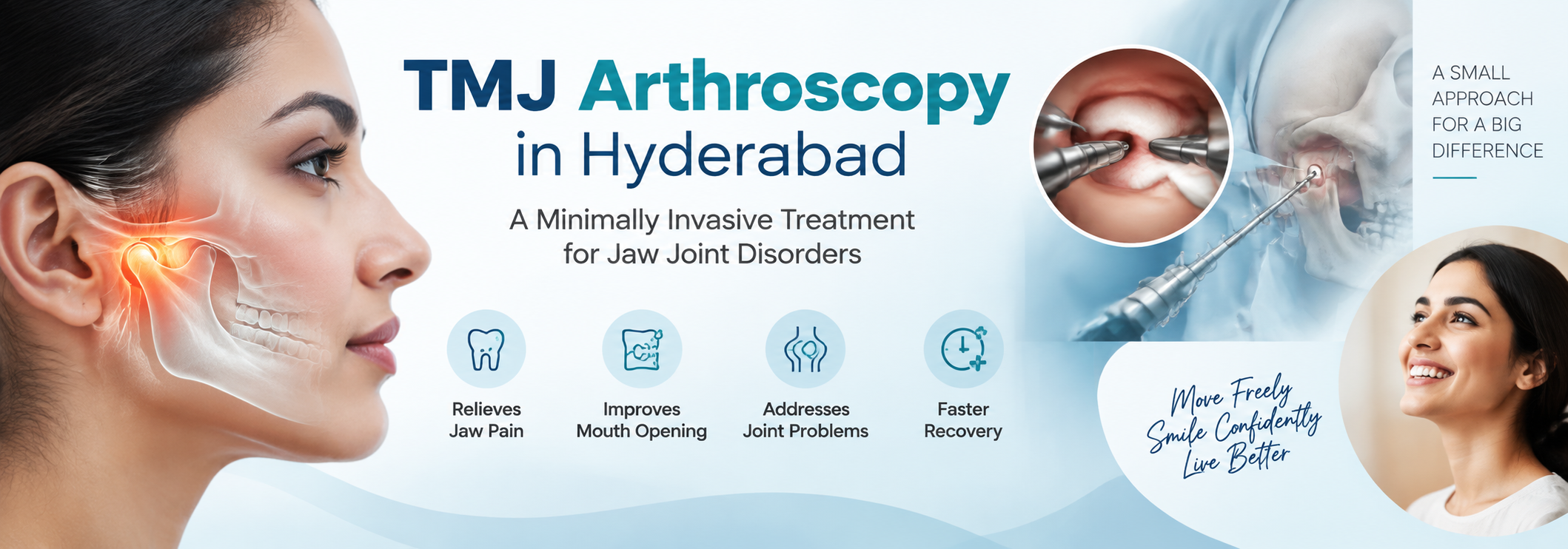
One such option is TMJ arthroscopy, a keyhole surgical procedure that allows an oral and maxillofacial surgeon to directly examine the inside of the temporomandibular joint and, in selected cases, treat problems within it. It generally involves much smaller surgical access than traditional open-joint surgery.
For patients searching for TMJ Arthroscopy in Hyderabad, understanding why the procedure is performed, how it works, and what recovery involves can make discussions with a TMJ specialist more informed.
What Is TMJ Arthroscopy?
TMJ arthroscopy is a minimally invasive procedure involving a very small camera called an arthroscope. The instrument is introduced into the jaw joint through a small opening near the ear, enabling the surgeon to see the internal joint structures on a monitor.
Depending on the condition, additional fine instruments may be inserted through another small opening to perform treatment inside the joint. TMJ arthroscopy therefore has both diagnostic and therapeutic applications.
For people experiencing persistent symptoms, consultation with a TMJ Specialist in Hyderabad can help determine whether the problem originates within the joint itself and whether arthroscopy is appropriate.
When Is TMJ Arthroscopy Considered?
Not every patient with TMJ pain requires surgery. Conservative approaches such as activity modification, heat or ice, medication where appropriate, physical therapy, and oral appliances may improve pain and function for many patients. Current professional guidance emphasizes evidence-based nonsurgical treatment and, when indicated, minimally invasive procedures before more extensive surgery.
A specialist may consider TMJ arthroscopy in selected patients with problems such as persistent intra-articular pain and dysfunction, restricted jaw movement, inflammatory changes, adhesions, or certain forms of internal derangement.
Symptoms that warrant professional evaluation can include:
- Persistent jaw-joint pain
- Difficulty or pain while opening the mouth
- Jaw stiffness or restricted movement
- Recurrent locking of the jaw
- Pain while chewing
- Clicking or popping accompanied by pain or functional limitation
- Symptoms that persist despite appropriate conservative treatment
These symptoms do not automatically mean arthroscopy is necessary. A detailed clinical examination and appropriate imaging are important before deciding on TMJ Disorder Treatment in Hyderabad.
How Is TMJ Arthroscopy Performed?
TMJ arthroscopy is commonly performed under general anaesthesia. A very small surgical port is created near the ear, through which the arthroscope enters the joint space.
Diagnostic arthroscopy allows the surgeon to directly inspect the joint and wash it out. More advanced therapeutic arthroscopy can use additional small instruments to address selected abnormalities, such as inflamed tissue, adhesions, or certain disc-related problems.
Because the procedure uses small access points rather than the larger incision associated with open joint surgery, postoperative scarring is typically limited. However, the exact procedure varies according to the patient’s diagnosis.
TMJ Arthroscopy vs Open TMJ Surgery
One important difference is surgical access. Arthroscopy uses small portals and a camera to work within the joint, whereas open TMJ surgery requires a larger surgical exposure.
Arthroscopy can diagnose and treat some jaw-joint problems without open surgery, but it cannot treat every TMJ condition. In some cases, open surgery may still be necessary if the underlying problem cannot be adequately addressed arthroscopically.
A Best TMJ Surgeon in Hyderabad search should therefore focus not simply on finding a particular procedure, but on receiving an accurate diagnosis and discussing the range of appropriate treatment options.
What Are the Potential Benefits?
For appropriately selected patients, TMJ arthroscopy offers several potential advantages. These include direct visualization of the joint, the ability to diagnose and treat certain problems during the same procedure, small surgical access points, and typically limited visible scarring.
It can also provide a less invasive surgical option before open-joint procedures in suitable cases. The expected benefit, however, depends strongly on the diagnosis and severity of the joint disease. More advanced joint disease may respond differently, and some patients may require additional treatment.
Recovery After TMJ Arthroscopy
Recovery differs from patient to patient. Some swelling, stiffness, and discomfort around the jaw joint are common during the first few days. Many TMJ arthroscopy procedures are performed as day cases, allowing patients to return home the same day when medically appropriate.
Patients may be advised to follow a soft-food diet temporarily and avoid excessive chewing. Jaw exercises or physiotherapy may form an important part of rehabilitation, depending on the surgeon’s instructions.
Anyone considering Jaw Pain Treatment in Hyderabad or Jaw Locking Treatment Hyderabad should discuss expected recovery, diet, exercises, return to work, and follow-up care with their treating surgeon.
Are There Risks?
Although TMJ arthroscopy is minimally invasive, it remains a surgical procedure and is not risk-free. Potential complications can include pain, swelling, bruising, bleeding, infection, temporary changes in bite, temporary facial muscle weakness, or hearing-related symptoms. The individual risk profile should be discussed with the surgeon before treatment.
This is why evaluation by an appropriately qualified oral and maxillofacial surgeon is important before deciding whether TMJ Surgery in Hyderabad is suitable.
When Should You See a TMJ Specialist?
Occasional jaw sounds without pain may not necessarily require surgical treatment. However, persistent pain, repeated jaw locking, worsening limitation in mouth opening, or difficulty eating should be professionally assessed.
An experienced TMJ Specialist in Hyderabad or Maxillofacial Surgeon in Hyderabad can evaluate the jaw joint, identify possible causes, and recommend treatment ranging from conservative management to minimally invasive procedures where appropriate.
Conclusion
TMJ arthroscopy is an important minimally invasive option for diagnosing and treating selected disorders within the jaw joint. It allows surgeons to visualize the TMJ directly through very small surgical access points and, where indicated, perform treatment without immediately resorting to open-joint surgery. However, successful treatment begins with the correct diagnosis, and arthroscopy is not necessary or suitable for every TMJ disorder.
For patients looking for TMJ Arthroscopy in Hyderabad, TMJ Treatment in Hyderabad, Jaw Pain Treatment in Hyderabad, Jaw Locking Treatment Hyderabad, TMJ Disorder Treatment Hyderabad, or a Maxillofacial Surgeon in Hyderabad, Dr Sandhya Gokavarapu is an oral and maxillofacial surgeon in Hyderabad who can be consulted for evaluation of TMJ and jaw-joint concerns. Whether arthroscopy is appropriate should be determined after an individual clinical assessment.
#TMJArthroscopyHyderabad #TMJArthroscopy #TMJTreatmentHyderabad #TMJSpecialistHyderabad #TMJSurgeonHyderabad #BestTMJSurgeonHyderabad #TMJDisorderTreatment #TMJDisorderTreatmentHyderabad #JawPainTreatmentHyderabad #JawLockingTreatmentHyderabad #TMJSurgeryHyderabad #TMJJointTreatment #TemporomandibularJointTreatment #MaxillofacialSurgeonHyderabad #OralMaxillofacialSurgeon #JawJointSpecialistHyderabad #JawClickingTreatment #JawStiffnessTreatment #LockedJawTreatment #TMJPainReliefHyderabad